Old Bus Photos

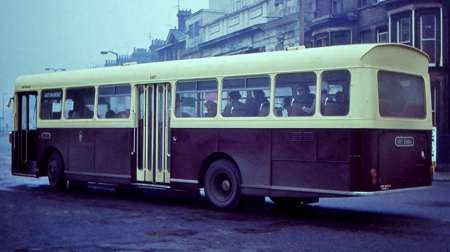
Lancashire United Transport – AEC Swift – NTC 109G – 292

Lancashire United Transport - AEC Swift - NTC 109G - 292
Copyright John Stringer

Lancashire United Transport
1969
AEC Swift MP2R
Alexander B43D

LUT’s single deckers were often a little different from the norm. This AEC Swift was one of three (291-293) delivered in either late 1968 or early 1969 (sources differ) along with some similarly bodied Bristol RESL’s. Their Alexander bodies were based on the W-type, but featuring short window bays, flat glass, V-shaped windscreens, and a plain front roof dome, rather than the more common version with long bays, curved screen and peaked dome. Interestingly they appear to have retained the curved rear screen though.
The Swifts did not find favour and were ‘swiftly’ withdrawn in 1973 and sold to neighbouring St. Helens Corporation, with whom they retained the same fleet numbers.

Photograph and Copy contributed by John Stringer


19/05/13 – 11:31

The Bristols, delivered at the same time, had a three part rear window arrangement including a full depth emergency exit door in the centre. Short window bays also appeared on the Plaxton bodied Seddon RUs and Bristol REs, delivered up to and including 1974.
I always thought the Alexander bodies, with their deeper window line, were better looking than the Plaxton bodied Seddon RUs and Bristol REs. and decidedly superior to the, at best, unattractive Northern Counties LH6Ls delivered in 1969.
The Swift’s short service duration with the company has always been a matter of conjecture. Was it the reputation the type was rapidly gaining in London or, much more likely, the fact that the power plant wasn’t a Gardner or, at a push, a Leyland.

Phil Blinkhorn


19/05/13 – 12:08

As we saw with the DM(S) Fleetlines, failure in London was not necessarily a reflection on the vehicle – more on the rigid London "system". As an AEC man, I would accept that the Swift (& Merlin) wasn’t their finest hour – but wasn’t as bad a the Panther and certainly not the disaster that was the Roadliner. It just wasn’t the RE! St Helens, Morecambe and Leeds – not to mention in a smaller way, Sheffield – gave them full service lives. [OK. I haven't forgotten East Kent.]
I think Phil’s final paragraph has it in a nut-shell. Non-standard – and not Gardner.

David Oldfield


20/05/13 – 07:33

Did Alexander classify these bodies as W-type? I think the more anonymous front front panels, and dome – OK the whole front! – has stood the test of time better than the "classic" W-front (and would probably be cheaper to repair in the case of any lower front panel damage). I think the three-window/smooth dome of the REs probably sat better with this frontal design than the "classic" curved-screen/peaked dome. For me though, the biggest single improvement over the usual W-type body has to be the straight window-line fore and aft. RE/RU/Swift/LH/Plaxton (bus bodywork)/Northern Counties/Alexander/LUT/LT/St Helens – I’d forgive them all shallow window-lines, inflexible practices, less-than reliable offerings etc, just to have them still around . . . I can’t see myself offering opinions on some First/Arriva etc Wright etc thingy 40+ years down the line. Its 44 years – this photograph is closer to 1926 than today!

Philip Rushworth


20/05/13 – 07:34

Four of the Sheffield two-door Swifts were sold to Hardwicks at Scarborough when they were just over three years old, and supposedly even one of those they acquired by default. Story has it that one of the buses they’d agreed to buy couldn’t be persuaded to start when they came to collect it, so they ended up taking a different one instead!
Two of the quartet, TWE 21F/22F got themselves sold on to Stokes of Carstairs a few years later, and when asked about the pair during a depot visit on one occasion, Mr Stokes himself suggested that the only good thing about the two of them was that they kept a fitter in full time employment!

Dave Careless


20/05/13 – 09:08

That quip made my morning, Dave C – don’t you just love black humour!

Chris Hebbron


20/05/13 – 09:09

And a Ribble Lowlander in view: from the (almost) sublime to the ridiculous – please refer to the Ugly Bus Page . . .

Pete Davies


20/05/13 – 11:36

As far as I know, Dave’s story is correct. You need a bit of black humour on a grey and gloomy Monday morning…..

David Oldfield


20/05/13 – 16:56

Glad you enjoyed that one, Chris and David! Again, it’s not only the vehicles, it’s the people involved with them that make this hobby of ours so fascinating and, at times, wonderfully entertaining.
And you’re not alone with respect to the Monday morning weather, it’s equally as dark as the humour here in Nova Scotia also!

Dave Careless


20/05/13 – 16:58

This style of body was also bought by Cardiff also on Swift chassis. Although LUT had bought Marshall bodies with a wrap round windscreen. They reverted to an almost fifties appearance for their Plaxton bodywork on Seddons and Bristols one wonders if this was a cost saving measure as a small two piece windscreen would be much cheaper to replace. The NCME ones were the standard product which was a strange mixture of styles that didn’t gell The next LUT saloons with wrap round windscreens would be a batch of Leopards with Plaxton bodywork which were LUTs swan song as an independent operator.
Despite their outer appearance I always had a soft spot for Ribbles Lowlanders they were certainly an improvement on a "lowbridge" Atlantean

Chris Hough


21/05/13 – 07:37

You’re right about the Lowlander Vs Lowbridge Atlantean, Chris! I have experienced the preserved Silver Star example of the latter style on a number of occasions. It doesn’t look right, somehow!

Pete Davies


21/05/13 – 07:38

Like St Helens, Blackpool also had a fairly large fleet of AEC Swifts which seemed to have full service lives.

Philip Halstead


21/05/13 – 12:40

Portsmouth Corp’n had 12 AEC Swifts in 1971, lasting 10 years. They went with some slightly older Panther Cubs and some slightly newer PDR2/1’s, seemingly part as a cleanout of single-deckers than for unreliability reasons. I seem to recall some of them finishing up with Basil Williams (Southern Motorways), actually owned by White Heather and which, during a rail strike, were used to ferry folk, working in the City, to London every day! Basil acquired quite a collection of Swifts/Merlins in the end. He’d earlier owned ex- London Transport GS’s, of course!

Chris Hebbron


21/05/13 – 15:50

Yes, Chris H, Portsmouth had 12 AEC Swifts (new 1969) with Marshall bodies, and these had wrap-round windscreens, which I always assumed were "BET style" (or similar). The 26 Panther Cubs (14 Marshall + 12 Met-Camm) were similar in appearance. The 12 PDR2/1s that followed in 1971/72 were unusual in two respects – saloon bodies on a d/d chassis, and Seddon as the manufacturer. Pompey began to withdraw the Panther Cubs in 1977, but some of them along with all the rest were still in service in 1981/82 when the MAP project was carried out. The drastic recasting of services saw all the remaining Panther Cubs, all the Swifts and some of the PDR2/1s leave the fleet, along with 14 5-year old Leyland Nationals! As you say, at least two of the Swifts ended up with Basil Williams of Southern Motorways fame. By the time deregulation came in, Williams had some ex-London Swifts/Merlins, too, and repainted them in his original Hants and Sussex red and cream livery, using that fleet name, too. A non-enthusiast friend of mine travelled on one of the ex-London ones said it was a "fantastic vehicle". Make what you will of that, good people – an ex-London bus, around 18 years old, run by Mr Basil Williams, in the opening days of deregulation…

Michael Hampton


Quick links to the  -  Comments Page  -  Contact Page  -  Home Page


Southampton Corporation – AEC Swift – TCR 293H – 7

Southampton Corporation - AEC Swift - TCR 293H - 7

Southampton Corporation - AEC Swift - TCR 293H - 7
Copyright Pete Davies

Southampton Corporation
1969
AEC 2MP2R Swift
East Lancs B47D

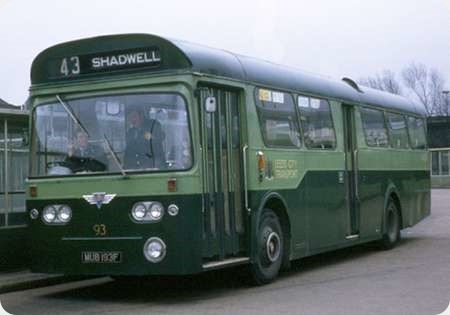
Here are an off side front and a near side rear view of Southampton Corporation TCR 293H fleet number 7. This AEC 2MP2R Swift was built in 1969 with East Lancs B47D bodywork. She is seen in Pound Tree Road between duties. I captured her on film in April 1976. There is something odd about the name of this road, which might be resolved if the UK ever goes fully "European". Does it refer to Kilogram or Euro? After all, there are people who think money grows on trees!

Photograph and Copy contributed by Pete Davies

———

13/01/13 – 10:27

Please refer to the "Gallery" entry on the King Alfred Running Day for comparative views of the Strachan body on similar chassis.

Pete Davies

———

13/01/13 – 10:28

Not sure I like ‘peak’ at the front, but otherwise, it’s a nice design in a simple livery. I recall that Seddon bodywork had similar peaks. Sign of the time, I suppose.
I think it’s fair to say that East Lancs bodies were not common along or near the South Coast. They are not too familiar to me as a Southerner.
Maybe the road should be re-named Poundstretcher Road, in recognition of the country’s plight!

Chris Hebbron

———

13/01/13 – 15:07

No, Chris, EL bodies don’t seem to have had much of a following in the South. I think Eastbourne was the only other Municipal, plus Aldershot & District and Southdown. Southampton bought them because, as one Manager told me, they were "cheap and cheerful"!

Pete Davies

———

13/01/13 – 15:08

I have a picture of another Southampton Swift/Strachan, MTR 424F, which I hope to submit in a Southampton gallery at some time. As for the rarity of East Lancs bodywork "south of Watford", you’re right, Chris. Aldershot & District and Eastbourne and Luton Corporations had them. To the east, Southend had some, and Lowestoft had a couple of PD2s in 1965. Otherwise, nothing, unless, of course, anyone else knows differently.

It occurs to me that Gideon Osborne would be looking to set up huge plantations of Pound Trees accessed by a thoroughfare called Recovery Road.

Roger Cox

———

13/01/13 – 17:19

Roger: just the 8 Reliances and 26 Lolines at Reading, of course. Not southern, but geographically south of Watford, there was also also Cardiff with a sizeable number; the Merthyr fleet doesn’t quite qualify as ‘south of Watford’!
The Pound of Pound Tree is surely the place to which illegally parked, or similarly recalcitrant, buses would be towed; in order to suitably screen any double-deckers from public view, it would have been surrounded by trees, the traditional corrugated iron fence being insufficiently tall.

Alan Murray-Rust

———

13/01/13 – 17:19

East Lancs bodies south of Watford must also include Southdown’s rebodied TD4 and TD5′s carried out between 1946 and 1950 of which there were a total of fifty nine plus of course their final batch of PD2/12′s Nos789-812 considered by many to be the best of the various body builders used on that chassis.
In later years East Lancs became much more popular in the region being bought by Brighton, Portsmouth, Southampton and Plymouth municipalities all outside of the sites timescale I know.

Diesel Dave

———

14/01/13 – 07:12

I must say, I like Alan’s theory of how the road got its name and Roger’s idea of a plantation of this sort of tree. It may be of interest that the bit of public open space to the nearside of the bus forms a gyratory layout, and is known – among bus crews at least – as WINO ISLAND. Guess why!
Thank you, Dave, for your thoughts on other South Coast operators of the EL (or Neepsend!) bodywork. Almost all of Southampton’s Atlanteans had the product and almost all are too new for these pages. I think the same applies to the Brightons and Portsmouths. The Southampton ones with other bodywork came from Plymouth and were well and truly clapped out when they arrived.
I look forward to Roger’s forthcoming "Southampton Gallery"!

Pete Davies

———

14/01/13 – 07:13

I can’t imagine how I came to forget the Southdown examples of East Lancs, Dave. I saw them many times when I popped down to Brighton from Croydon. Thanks for reminding me. I agree that the Welsh examples should be included in our survey, Alan. Cardiff is certainly south of Watford, and I doubt that the people of Merthyr would consider themselves to be "northerners" or even "midlanders".

Roger Cox

———

14/01/13 – 15:34

Southdown also had 40 East Lancs bodied Leyland Royal Tiger PSU1/13 saloons. The first 10 had rear entrances and the rest had centre entrances. All were later converted to front entrance OMO.

Roy Nicholson


Quick links to the  -  Comments Page  -  Contact Page  -  Home Page


Rochdale Corporation – AEC Swift – MDK 735G – 35

Rochdale Corporation AEC Swift

Rochdale Corporation
1969
AEC Swift MP2R
Seddon B46F

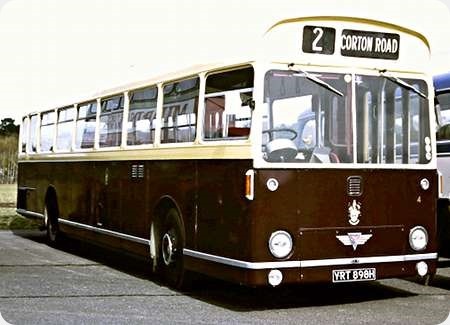
My Thanks to Ian Beswick for contributing the above excellent shot of this Rochdale Corporation AEC Swift with its Seddon body who also supplied bus bodies under the name of Pennine.
The Swift was AECs move into the rear engined single decker market. It first appeared at the 1964 commercial motor show and there were two versions a low frame for bus work and a high frame for coach operations. Operators also had the choice of either the 16ft 6in wheelbase for a vehicle length of 33ft or 18ft 6in for a 36ft vehicle. The high frame version allowed for luggage to be stored in underfloor side lockers due to the fact that the rear of the vehicle housed the horizontal six cylinder diesel engine. Yet again there was a choice of two engines the AH505 ?? litre or the AH691 11·3 litre. London transport acquired several 36 ft 11·3 litre Swifts which they called Merlings (MB) for some reason best known to them, but the manoeuvrability was poor so the shorter version (SM) were acquired but due to the shorter length they had to have the AH508 8·2 litre engine which rendered them well under powered.

Photograph contributed by Ian Beswick

———

When AEC first announced its rear-engined single deckers, there were to be two models, the medium-weight Swift with the AH505 engine (33ft or 36ft), and the heavy-duty Merlin with the AH691 (36ft only). London Transport ordered their Merlins at that stage.
By the time the two models went into production, they had been harmonised to such a degree that AEC renamed them Swift 505 and Swift 691. But LT always persisted with the original names.

Peter Williamson

———

Can someone give technical information on the Swift Chassis, like its length, weight, width and other information?

Charlie

———

The Swift was the first joint production with Leyland after the 1962 "merger".
The main chassis frame, and other components, were common to the Swift and the Panther. The engines and axles were unique to each respective model.
There was a 32’6" (AH505) model (Leyland was the Panther Cub with 0.400 engine). There was a 36’0" long (AH505 or AH691) model (Leyland was the 0.600 Panther).
All were 8’2½" wide. There was the most common bus version with a lower front frame and the high frame model intended for coach work. In the event, no AEC Swifts were built with high frames but there were a number of high frame Panthers, some with 0.680 engines.

David Oldfield

———

Does anybody by chance know the weight of the AEC SWIFT AH505 Chassis?

Charlie

———

13/02/12 – 07:18

I once worked with a former London Transport engineer, who told me how Merlins were constantly being reported for defective engine stops. Quite often the true explanation turned out to be that the awful engine had worn its cylinder bores oval, so the bus was actually burning its own sump oil which was leaking past the piston rings! No good cutting off the diesel if that isn’t what’s burning…!
And, I once attended a Traffic Commissioner’s hearing in Southampton where Bill Lewis, then General Manager, responded to a question about the Southampton Swifts by saying: "If only someone would make me an offer for them!". Not one of AEC’s best efforts!

David Jones

———

21/04/12 – 11:38

I had a couple of holidays in South Australia in the mid 90s where I saw many ex Adelaide Swifts in various guises. Their were some in a yard at Port Adelaide being converted for further use. In Port Pirie the local bus company had about 6 in use. There was one on town service in Port Lincoln. One at Port Kenny as a caravan which had a Hino engine a popular conversion with mobile home conversions. A further mobile home in North Adelaide. Another in Woolaston near Gawler. In a Marina at Port Adelaide I found one in use as a support vehicle for a film company who had four more in stock for the same purpose all still with their AEC engines, one of which had just returned from filming a documentary in the out back doing many miles off road. I read a couple of years ago the some Swifts had been refurbished and sold to a mining company on an island in Indonesia for staff transport. All this info suggests that the poor reputation of the Swifts might be unjustified.

Ron Stringer

———

21/07/12 – 12:19

As an enthusiastic operator of AEC’s Swift. I find it difficult to imagine how a few operators apparently had so much trouble with them. From working for an independent who acquired nine of them second hand … and with more to put into service had he not passed away, to running four of my own, I found them excellent, reliable and economical work-horses. Any mechanical maladies were easily attended to as everything was practically laid out in typical AEC fashion. There are few more challenging bus operating areas than North Staffordshire with it’s mix of dense urban environment and steep hills. All ours were 505 powered which generally allowed 10mpg on service and any feeling of being underpowered was usually attributable to a stretched accelerator cable in my experience. Were I still operating today, I’d have no hesitation in having one around as a spare bus … indeed I share a preserved one. (ps. The 505 was generally regarded as being just under 8.2 litres swept volume and had power outputs up to about 160bhp)

Martyn Hearson


Quick links to the  -  Comments Page  -  Contact Page  -  Home Page


All rights to the design and layout of this website are reserved     Old Bus Photos does not set or use Cookies but Google Analytics will set four see this

Old Bus Photos from 11:53 Saturday 25th April 2009 to 14:59 Tuesday 21st May 2013